










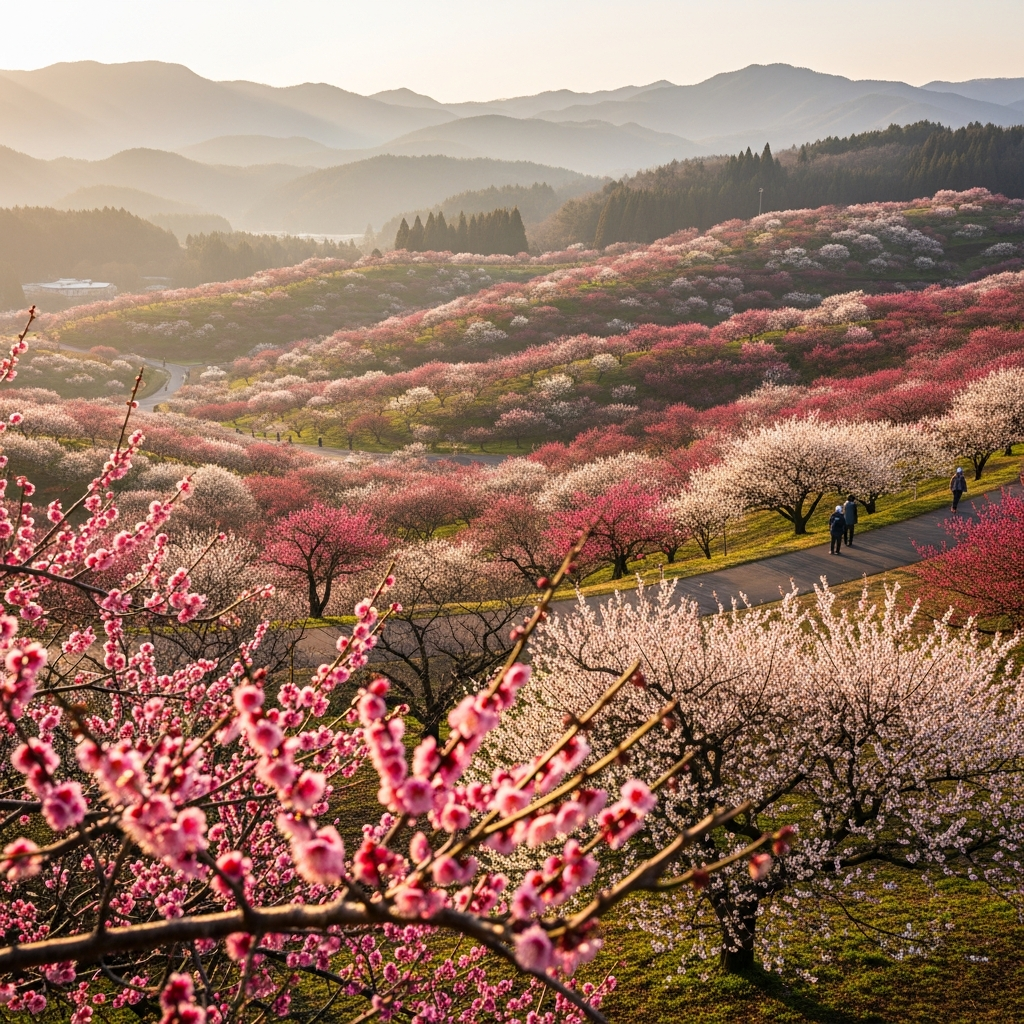
Japan’s Enchanting Pre-Bloom Era
Early March in Japan ushers in a period of exquisite anticipation, a serene prelude to the vibrant cherry blossom spectacle. This is the exclusive season of the ume, or plum blossoms, which offer a cooler, more intimate glimpse into Japan’s spring awakening. With crisp air and noticeably fewer crowds, it’s an ideal time for travelers seeking a unique, tranquil experience.
Discovering Early Spring Wonders
While the sakura forecast is just beginning to whisper, the plum blossoms are in full, glorious display. For an unforgettable immersion, venture to the Inabe City Agricultural Park (Inabe-shi Nogyo Koen). Here, a mountain landscape is transformed by over 4,000 plum trees, creating a breathtaking tapestry of pink and white blooms, accompanied by an intoxicating fragrance. This offers a peak bloom experience without the typical tourist throngs.
- Seasonal Culinary Delights: Early March marks the beginning of limited-edition spring offerings. Explore local convenience stores or chic cafes in areas like Daikanyama for the first sakura-themed lattes, pastries, and snacks. These seasonal tastes provide a delightful introduction to spring’s arrival.
- Immersive Art at teamLab Borderless: The renowned digital art museum, teamLab Borderless, has recently reopened in a new location within Azabudai Hills, Tokyo. Visiting now allows for a more spacious and contemplative experience before it becomes a major draw for peak season visitors. It’s a sensory journey perfectly suited for a cool March evening.
- Night Hanami with Plum Blossoms: Embrace the tradition of night viewing, or yozakura, with illuminated plum blossoms. While awaiting the cherry blossoms, explore parks where plum trees are beautifully lit. Nabana no Sato, famous for its extensive winter illumination, often continues its light displays into early spring, offering the dual delight of grand illuminations and early blossoms.
Respectful Travel Insights
When visiting Japan’s sacred shrines or temples, observe local customs to enhance your experience and show respect. Avoid walking directly down the center of the main path, known as the seichu, as this route is traditionally reserved for deities. Instead, walk along the sides, a small gesture that demonstrates cultural awareness and appreciation.